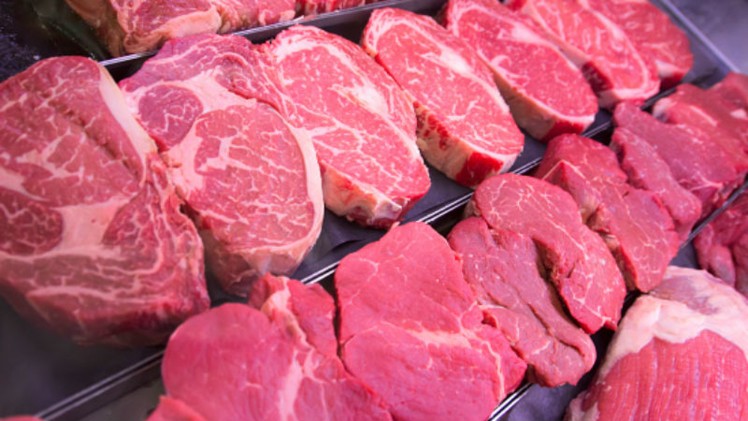
LAHORE: Pakistani halal meat industry experts said that the country now needs a comprehensive strategy that should address both supply and demand-side constraints, which currently are hindering country’s potential in the global halal meat market.
They also emphasize the need for improved infrastructure, greater investment in technology, and the adoption of international best practices in meat processing and packaging.
“Despite the potential, Pakistani halal meat exporters face several challenges that hamper their growth. A lack of modern slaughterhouses, inadequate cold chain facilities, and limited access to finance are some of the structural issues within the country”, said Ijaz Arif an industry expert.
Normally exporters face difficulties while meeting the global strict quality and certification standards, a part of that, the lack of government support in terms of subsidies and policy facilitation for exporters add-up the burden for them”, he added.
The industry experts believe that the issue of non-tariff barriers, such as strict halal certification and traceability requirements is also a significant hurdle. Many importing countries demand rigorous standards that Pakistani producers often struggle to meet due to limited resources and outdated practices. The global halal certification landscape is fragmented, with different countries having different standards, making it difficult for exporters to comply, and without a unified approach to certification and quality control, Pakistani exporters will continue to face challenges in accessing premium markets.
The global halal meat market is projected to be estimated at over $700 billion, with an expectation to surpass $1600 billion by 2033. Pakistan’s halal meat industry is also expanding, as per a report of Pakistan institute of Development Economics, the surplus production of meat, which includes beef, mutton and poultry, presents a significant opportunity for Pakistan to increase its foreign exchange earnings through exports.
According to the State Bank of Pakistan, exports of meat and edible meat offal increased dramatically from $14 million in 2003 to $467 million in 2023, growing at a CAGR of 18%. Among meat types, beef ranks as the largest meat export sector of Pakistan, contributing $332 million, followed by mutton with $42 million, offal of all animals with $18 million, poultry with $0.03 million and others with $74 million in 2023.
But despite being the 15th largest meat producer globally, Pakistan ranks 57th in meat exports, due to the underperformance of its meat export industry. Moreover, the lack of technological innovation and research in meat processing, packaging, and transportation further contributes to the industry’s stagnation. Experts argue that there is a pressing need for the government to invest in research and development to enhance the efficiency and quality of halal meat production.
Middle East, Southeast Asia, Europe, and North America are the major markets of Halal meat, whereas Brazil, Australia, and New Zealand currently dominate the global supply chain, leveraging due to their advanced meat processing technologies and stringent quality control measures. “Pakistan’s halal meat industry is huge, as the country is blessed with a large livestock population with relatively low production costs as compared to other markets”, said Doctor Ahmad Raza, a Middle East based halal meat trader.
He added that the Pakistan’s location is ideal, and the meat exporters are continuously looking to diversify to other markets. “I think China can be a game changer in this regard as there is a growing halal meat demand, however beyond China there are other countries too, which can be good markets for Pakistan”.
There is a dire need to fix geopolitical complexities, the government should play a pivotal role in terms of facilitating market access through trade diplomacy and bilateral agreements. Establishing globally recognized institutes and halal certification center as with such strategic investments and reforms, Pakistani meat industry can overcome the existing challenges and emerge as a leading halal meat exporter in the world. “This can certainly be a win-win situation for both exporters and the country, as with such reforms the country could easily be able to get a couple of billion dollars of foreign exchange in just few year”, Raza added.