LAHORE: The department of plant protection has allowed the Center for Agriculture and Bioscience International (CABI) to import two more biocontrol agents from Australia to fight the menace of invasive parthenium weed in an environmentally sustainable way to minimize the use of hazardous chemicals for managing the growth and spread of the weed.
CABI, a UK-based nonprofit inter-governmental organization for scientific research, has been leading efforts to control parthenium, also known as famine weed, naturally in Pakistan since 2017 besides undertaking mass, community awareness campaigns under its action on Invasives programme and training farmers about the impacts of parthenium and management techniques in collaboration with government agencies and public universities.
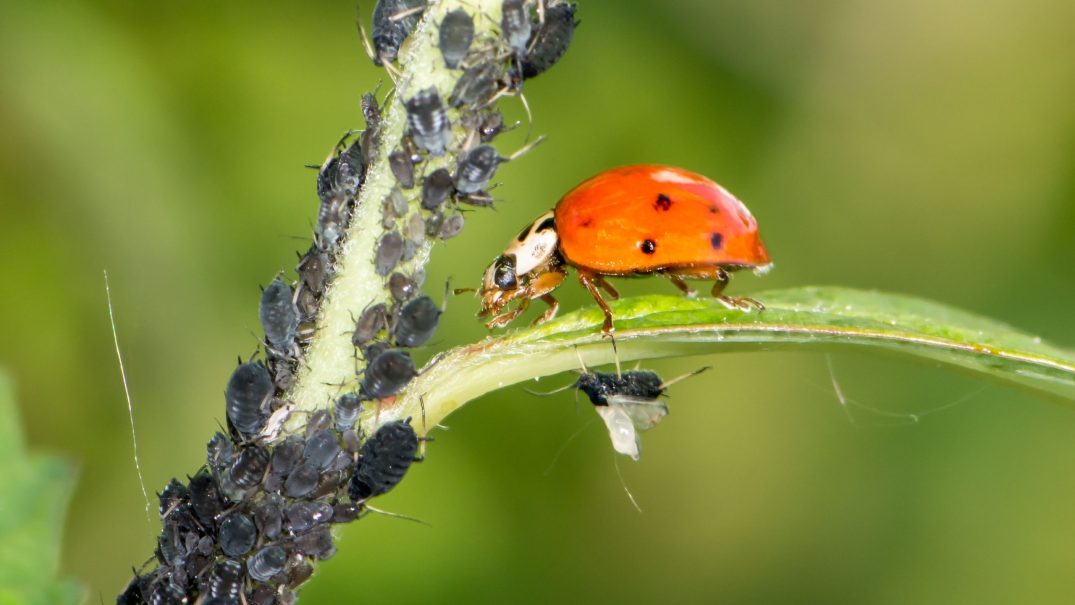
It had introduced and released the first biocontrol agents, weevil, imported from South Africa in various areas of the country last year after years of rigorous tests in quarantined laboratories. As per experts, Biocontrol is an effective way of controlling invasive non-native species. It helps farmers to avoid the use of harmful chemical pesticides. The biocontrol agents only control the target pest or weed by feeding and developing on them.
Also known as “famine weed”, parthenium is considered as a ‘serious weed’ around the globe due to its potential impact on crop output, and human and livestock health. It has been named the “suicide weed” in India. Native to tropical America, it was introduced to several regions of the world, and has spread to 48 countries in Africa, Asia and the South Pacific.
Experts said that Parthenium entered Pakistan in the 1980s from India and has since spread rapidly across the country’s rural and urban landscapes, damaging local habitats and harming agriculture, especially food crops like wheat, rice and maize. It now covers thousands of hectares of land, particularly in the rain-fed districts of northern Punjab, Khyber Pakhtunkhwa and AJK, and has become a dominant weed in wastelands, degraded areas, and along roadsides and water channels. It has also been recorded in some areas of Balochistan and Sindh.
Abdul Rehman, deputy director (Projects Implementation and Research) at CABI, told Express Tribune that Pakistan should concentrate on a multi-biocontrol agents approach. “So CABI, with expertise in biological control, is focusing on the import of two new biocontrol agents to manage parthenium weed, which is also known as gajar booti in Pakistan,” he said adding “Many of the 48 countries invaded by parthenium are deploying biocontrol agents to fight the growth of the weed that can reduce crop output by 46-90% and cause serious allergies and disease among humans and animals.
Australia has screened and approved the release of 11 biocontrol agents. Others like India, South Africa, Ethiopia and Sri Lanka are also focusing on biocontrol of the noxious weed under an integrated pest management approach against parthenium that involves community participation and biological controls.
Despite the promising potential of biological control, several challenges have been encountered in the introduction of biocontrol agents to weed out parthenium in Pakistan. “Besides environmental factors, the tediously complex and time consuming processes delay approvals for the import and release of two biological control agents in Pakistan took CABI almost four years of quarantine testing before the government approved the release of the first biocontrol agent” Rehman said.
It was also not allowed to be released in agriculture fields but only in the wild rangelands and controlled areas. Besides, adequate funding and technical expertise is also lacking to support biological control programmes. “By reforming our regulatory regime, we can save a lot of time and money, for instance, if an agent is tested rigorously in Australia or South Africa, we do not need to repeat the entire process here. We have just got permission to import two new agents but we will not be able to release them before 4-5 years after they arrive here”, he said adding “The authorities must think over this policy and find ways to reduce the time to a maximum of one year for their deployment after import”. Nonetheless, he believed that the future prospects for biological control of parthenium in Pakistan remain promising despite regulatory and other challenges.